
Comparisons • Research-based • Updated 7 October 2026
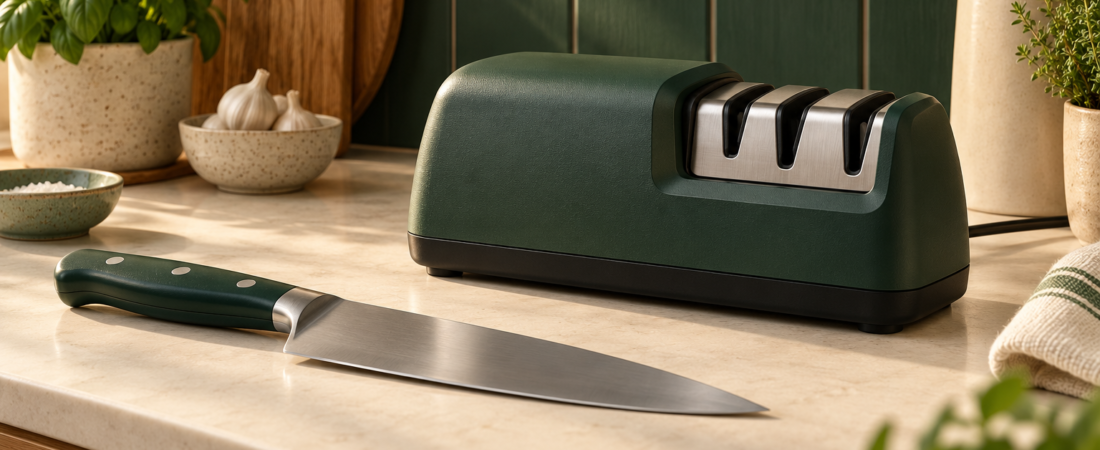
Featured image: AI-generated editorial illustration; not an exact product photograph or hands-on test.
Based on manufacturer information and editorial analysis. No hands-on testing claimed. Check the exact knife and tool manuals before use.
The manual vs electric knife sharpener choice changes your workflow: an electric sharpener powers the abrasive, while a manual method depends on your movement. That difference can make the workflow more convenient, but it does not determine compatibility or prove that one category removes less metal.
Manual vs electric knife sharpener: practical differences
| Factor | Manual options | Electric options |
|---|---|---|
| Power and space | No motor power required; setup varies | Power supply and suitable counter position required |
| Angle choices | Freehand, preset or adjustable depending on tool | Model-specific guided stages and angles |
| User control | Movement and setup depend on method | Correct stage, speed and pull technique still matter |
| Consumables | Stones, rods, discs or plates | Manufacturer-specific abrasive and service arrangement |
A manual sharpener is not one thing
A whetstone, a guided clamp and a pull-through device all belong to the manual category, yet use very different geometry and abrasive contact. Avoid comparing an entire category with one electric model. Make the comparison between two tools you could realistically purchase and use.
A freehand stone asks you to manage angle control. A clamp system asks you to position and secure the blade. A rolling system asks you to check the holder and roller fit. A manual tool can still be aggressive if its abrasive and your technique remove substantial material.
Electric convenience has conditions
Read the full manual for the exact model. Check which blades are permitted, what angle each stage produces, which steps are intended for routine maintenance and what procedures apply to serrations. The Chef’sChoice manual library lets buyers make that model-level check.
Do not run every blade through every stage as a standard routine. The manual’s sequence and the condition of the knife should determine the work. If the required angle is unsupported, powered convenience does not solve the mismatch. Shun’s FAQ explicitly makes angle compatibility part of choosing another electric sharpener.
Choose around your kitchen
An electric system may appeal if you want a defined powered workflow and have compatible knives, suitable storage and counter space. A manual setup may appeal if you want a portable system, enjoy controlling the process or have no convenient power point. Neither choice removes the need to clean the knife and tool according to their instructions.
Before choosing
- Compare the exact angles, rather than broad Asian and Western labels.
- Confirm the procedure for your bread knife separately.
- Add replacement parts and service costs to the purchase price.
- Read the operating instructions before deciding the workflow looks easy.
See our electric buying guide and beginner method guide. This comparison is about choosing a routine; we have not measured sharpening speed, edge retention or motor durability.