
Comparisons • Research-based • Updated 7 October 2026
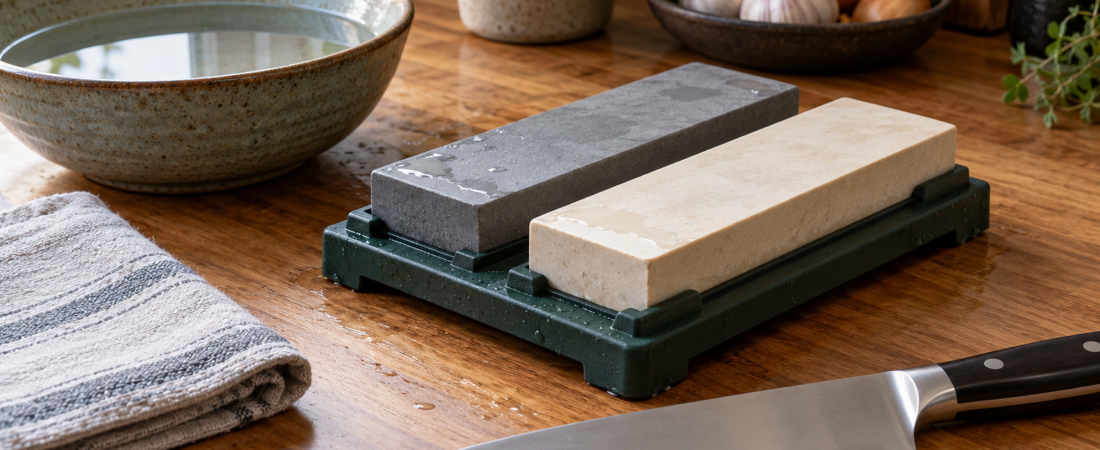
Featured image: AI-generated editorial illustration; not an exact product photograph or hands-on test.
Based on manufacturer information and editorial analysis. No hands-on testing claimed. Check the exact knife and tool manuals before use.
For the waterstone vs diamond stone decision, compare the task, actual abrasive series and maintenance routine. Both can be part of a useful sharpening setup. Matching grit numbers alone does not establish equivalent performance.
Waterstone vs diamond stone: key differences
| Buying question | Waterstone | Diamond stone or plate |
|---|---|---|
| Preparation | Series-specific wetting or soaking instructions | Series-specific dry or lubricated use instructions |
| Flatness | Check wear and flatten as instructed | Check plate condition; do not assume every construction is identical |
| Grit label | May use a different rating system | Compare published micron size or maker’s progression where available |
| Complete kit | Holder and maintenance method | Stable base and specified cleaning method |
Preparation should be specific
Do not soak a stone merely because it is called a whetstone. Identify its series and read the supplied instructions. Equally, do not add oil to a diamond tool simply because another plate permits it. The abrasive bond, backing and tool construction can change the maker’s care advice.
Compare the work, not just the numbers
Norton’s selection guide notes that waterstone grit ratings are not directly comparable with benchstone and diamond ratings. The practical buying question is which surface performs the maintenance stage you need and which next stage the maker recommends.
For routine kitchen maintenance, first decide whether the knife needs a new basic edge, refinement or repair. A coarse surface bought for occasional damage repair should not become the default choice for every touch-up. Read our grit guide for a task-based progression.
Think about cleanup and support
A waterstone setup needs a place for preparation, residue and drying. A diamond setup still needs cleaning and safe storage. Choose a holder that suits the working surface rather than letting a thin plate slide around the counter. Include the maintenance items in your price comparison so one option does not appear artificially cheap.
Shapton’s FAQ provides series-specific answers on clogging and lapping. Such instructions are more useful than applying a general claim about ceramic stones to every product.
Which to put on your shortlist
Put a waterstone on the shortlist when you want its recommended progression and can maintain it as instructed. Put a diamond tool on the shortlist when its exact abrasive stages and construction fit your work and storage routine. A mixed setup can also make sense, but only when the stages complement each other rather than duplicating a label.
We have not conducted a controlled cutting-speed or wear test. Claims about how fast a particular plate sharpens or how many sessions a stone lasts require evidence beyond its grit number. Start with the budget kit guide and choose a complete, supported setup.